Ice and mixed · Skin is gear

Sweaty hands in cold gloves. Then the barfies.

Ice climbing asks hands to grip hard for long pitches inside gloves that trap sweat, then freeze it. The rewarming hurts, the knuckles crack, and the forearms pump on steep ice. Here is how ice and mixed climbers keep hands dry, warm and working.

Katie McKinstry Stylos
1 on the crew · see who
Skin is gear
Why hands freeze

Wet hands get cold first.

A glove is only as warm as the hand inside it is dry. Hands sweat on the approach and on the hard moves, the liner soaks, and the cold gets into wet skin far faster than dry. The barfies, that rewarming pain at the top of a pitch, comes from hands that went cold and clamped down on blood flow while you gripped the tools.

Dry hands the night before keep the liners drier longer. A looser grip keeps blood moving. Repair at the end of the day puts water back into knuckles that spent eight hours in dry, freezing air. Same cream climbers use on summer rock, put to work in winter.

An ice day, hour by hour

From the trailhead to the hut.

Where hands go wrong on a cold day, and what goes on at each stop.

The night before · 9 PMDry hands, drier liners.

Performance on palms and fingers before bed. Gloves stay drier through the approach and the first pitch, and dry hands stay warmer.

Trailhead · 6 AMCover the face and lips.

Zinc on the lips, Repair on the cheeks and nose before the wind finds them. Spare liners in an inside pocket.

Steep pitch · 10 AMGrip loose, keep blood moving.

Shake out between placements. Massage Cream on the forearms at the belay keeps them warm for the next lead.

Top out · 1 PMThrough the barfies.

Hands in the armpits, wait it out, then a dry liner. Tape any knuckle the tool grip rubbed open.

The hut · 6 PMPut the water back.

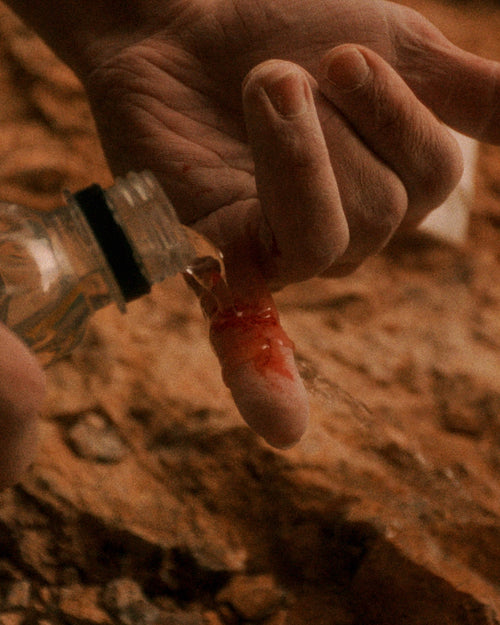
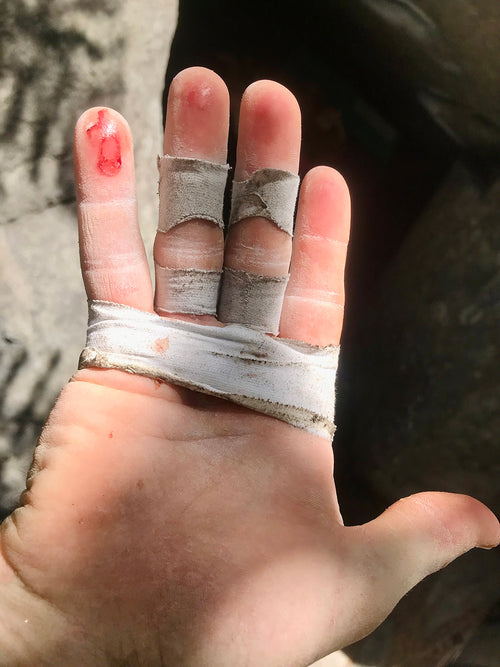
Split on cracked knuckles and split fingertips. Repair on the hands and face. Massage Cream on the calves after a day on frontpoints.

Find your way in

Tell us what happens. We'll point.

No score and no wrong answers. Pick what sounds like you, and every answer opens another door: a fix, a page, a longer read.

The pack

What's in the ice bag.

Travel sizes in the inside pocket where they won't freeze. Full sizes at the hut.

Powder Day
All of it, one boxPowder Day

The cold-weather set in one box. Hands, face, muscles.

The whole routinePowder Day$102.95$85.00
10 items · pick a size, hit Add
The night beforePerformance$8.95
Spray versionDry Spray$8.95
Hands and faceRepair$8.95
Cracked knucklesSplit$4.95
Whipped balm, wrecked handsSplit+$8.95
Forearms and calvesMassage Cream$8.95
At the belayAcupressure Massage Ring$5.00
Tool-grip hot spotsRhinos' Own Adhesive tape$3.95
Glassy hands at the hutHydrate$8.95
The crew

The people who test this on ice.

Ice, mixed and drytooling. Our winter climbers tell us what froze and what didn't.

Katie McKinstry Stylos
Katie McKinstry StylosIce and mixed, Rhino athlete

Swing tools, use Rhino, want in? Tap to apply.

Seen on the ice

Show us the pillar.

Frozen beards, the pump, the hut at dusk. This wall is yours.

Post it, tag @rhinoskinsolutions and #SkinIsGear. We pull the best ones onto this wall every week.

Field reports

From the comments.

Reviews land here as ice climbers leave them.
Made in
Redmond
Oregon

We make everything in our own facility in Redmond, Oregon, on 100% on-site solar. Central Oregon winters are long and dry, and the crew climbs through them.

Made in Redmond

Where it comes from.

How Rhino started
Made in Redmond
Want to climb with us?

Join the Rhino crew.

Ice, mixed, drytooling, alpine. If you are swinging tools all winter, apply.

The Rhino Deep Dive

Want the long version?

What is in each bottle, what it does, and when to reach for it. Ingredient by ingredient, sport by sport, in one book you can flip through.